

Stand taller for Posture Month
May is National Correct Posture Month. Here are three simple steps to check, strengthen, and protect your posture all year.
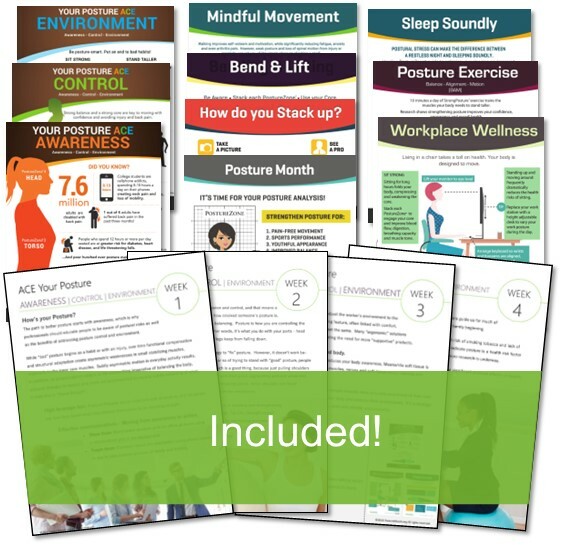
Are you a professional? A Posture Month toolkit for health and fitness pros is available, and you can post a directory listing to offer posture checks during Posture Awareness Month.
Get the Posture Month toolkitIt turns out mom was right about standing up straight. From athletes who work with postural alignment therapists to the thousands of people with back pain and muscle aches helped by Certified Posture Exercise Professionals, strengthening posture matters. It is not just about looking good.
Studies show people with better posture are healthier and live longer. From kids with backpacks to seniors with canes, poor posture is a major cause of back and neck pain at every age, and over time it often contributes to digestive and cardiopulmonary problems.
Three steps to keep you standing tall
1. Take a posture picture
Ask a friend to photograph you from the front, back, and side. Print each one on its own sheet and look at your body symmetry. Comparing posture pictures year to year can be eye-opening.
To check alignment, put a dot between your feet on the front and back views, and at your ankle on the side view. Fold each sheet neatly in half at the dot.
- Front and back view: the two halves should match. If your head or torso sits off to one side, or your arms hang differently, your posture is not symmetrical.
- Side view: the line from your ankle should pass through your shoulder and ear. If your head is well forward of that line, you may have forward head posture.
File your posture picture and compare it to a new one next year.
2. Begin posture strengthening exercises
Posture exercise maximizes the benefit of any workout and is a smart starting point for correcting posture. StrongPosture® exercise, yoga, tai chi, and Pilates all build body awareness and control. Dr. Weiniger's StrongPosture program in Stand Taller Live Longer starts with two exercises: the Stork for balance and the WallStand for alignment.
- Best posture Stork: stand tall with your best posture, then lift one thigh until your knee is at hip height. Hold for 30 seconds on each side, focusing on staying tall and aligned.
- Vertical WallStand: back up to a wall so your heels, buttocks, shoulders, and head all lightly touch it. Keep everything level and relaxed, and take three slow breaths while feeling your best posture.
If you feel stress in any area, get your posture checked by a professional.
3. Choose smart posture habits
- Get a good chair and change its position through the day. Try a chair support that moves with you and supports from beneath.
- Invest in quality shoes, and consider a shoe insert or orthotic, especially if you have had foot problems.
If you have back pain, neck soreness, or another posture problem, or want to see how stronger posture can improve sports performance and wellness, help is available. Consult a Certified Posture Exercise Professional or another pro trained to analyze posture pictures and teach individualized posture exercise: a chiropractor, physical therapist, massage therapist, or athletic trainer.
Your posture is how the world sees you. A little effort at strengthening it is an anti-aging habit that helps you look and feel better, avoid injury, exercise effectively, and stay active as you age.
Join the 31 Day Posture Challenge. Every day of May is a national posture day.
Take the challenge